Used Tesla Model X: Battery, Variants, SoH
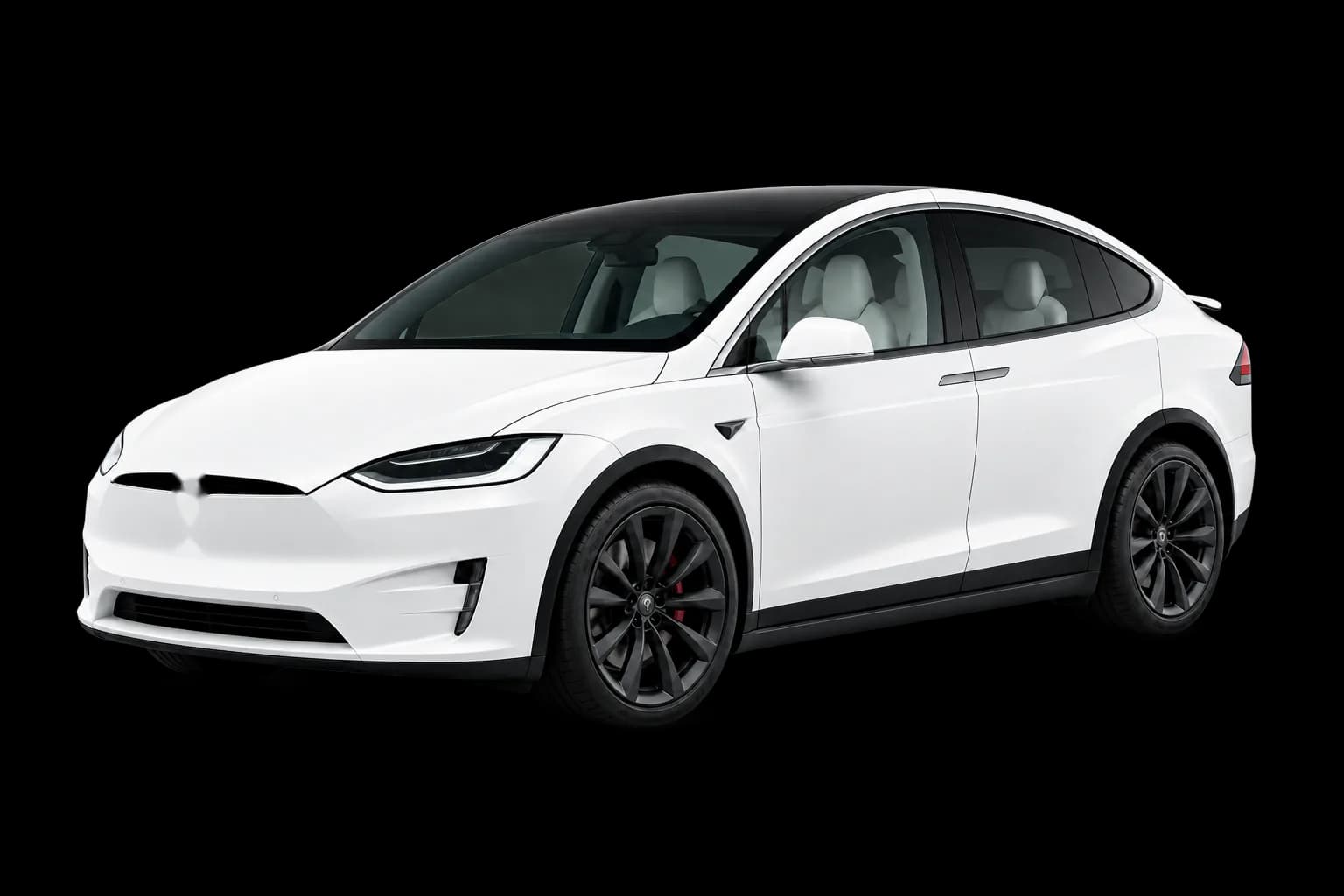
Variants & batteries at a glance
| Variant | Period (EU) | Usable capacity | Cell chemistry |
|---|---|---|---|
| 75D, 90D & 100D / P100D (18650 era) | 2016 – early 2019 | approx. 72.5 · approx. 85 when new · 95–98 (sources disagree) | NCA |
| Raven Long Range / Performance | 04/2019 – 2020 | 95–98 | NCA |
| Palladium facelift Long Range / Plaid | German deliveries from 12/2022 | 95 | NCA |
75D, 90D & 100D / P100D (18650 era) (2016 – early 2019)
| Period | net kWh | Chemistry | Cells |
|---|---|---|---|
| 2016 – 2019 (75D; 60D only in 2016, a locked 75 pack) | approx. 72.5 | NCA | Panasonic 18650 |
| 2016 – 2017 (90D, P90D) | approx. 85 when new | NCA | Panasonic 18650 |
| from late 2016 (100D, P100D) | 95–98 (sources disagree) | NCA | Panasonic 18650, 8,256 cells |
The packs are identical to the Model S — including how they age: fleet data shows the 90s degrading markedly faster, and the 100s are the most robust choice. Because the X consumes more energy, every lost percentage point cuts deeper into everyday range than on the S.
The rare 2016 X 60D physically carries a 75 pack — check the lock status.
Raven Long Range / Performance (04/2019 – 2020)
| Period | net kWh | Chemistry | Cells |
|---|---|---|---|
| 2019 – 2020 | 95–98 | NCA | Panasonic 18650 |
A more efficient drivetrain and 200 kW charging on the same 100 pack. As with the Model S, mind the European gap: no new deliveries from 2021 until late 2022 — cars first registered in those years are usually imports or stock vehicles.
Bought before the end of January 2020? Then the old warranty regime with no mileage limit still applies (see the FAQ).
Palladium facelift Long Range / Plaid (German deliveries from 12/2022)
| Period | net kWh | Chemistry | Cells |
|---|---|---|---|
| from 12/2022 | 95 | NCA | Panasonic 18650 |
New architecture, modern BMS, still 18650 cells — technically identical to the Palladium Model S. Too young for reliable long-term statements on the used market.
Battery warranty for this variant: 8 years / 240,000 km (70% minimum capacity).
The Model X shares its battery technology with the Model S — the packs are identical, the warranty regimes the same. What differs is the effect: the big SUV uses more energy, so every percentage point of SoH loss translates into more lost everyday range. And because used X models stay expensive on resale (early 75D/100D from around €25,000, Palladium close to six figures), battery proof is worth hard cash here.
Reading the SoH on a Model X
The in-car test, app self-diagnosis and hardware testers work exactly as they do on the S; the full comparison is in our guide checking Tesla battery health. One caveat: judge condition by capacity, not by displayed range — on the X that varies especially widely with towing, large wheels and climate control.
Akkubrief carries the same limit as on the Model S: we issue for the 75D (2016–2019) and for the Palladium generation (Plaid from 2021, Long Range from 2022). For the 90D, the 100D and the Raven years we have no sourced figure for how much the battery held when new, and we do not guess it. You can still connect the car and follow its history.
What to look for when buying used
First establish the warranty regime from the first owner's purchase date (FAQ), then identify the pack variant from the matrix: a 100D is the most durable choice of the early years, while a 90D deserves a particularly careful measurement. Ask for the replacement history — replacement packs are younger than the car and a selling point. And for every X out of warranty the same rule applies as on the S: you do not buy the most expensive component on someone's word, you buy it with proof.
Battery warranty
Tesla warrants the battery for 8 years with at least 70% remaining capacity. Mileage limits and exceptions are shown with the variants above and in the questions below.