Used VW ID.7: Battery, Variants, SoH
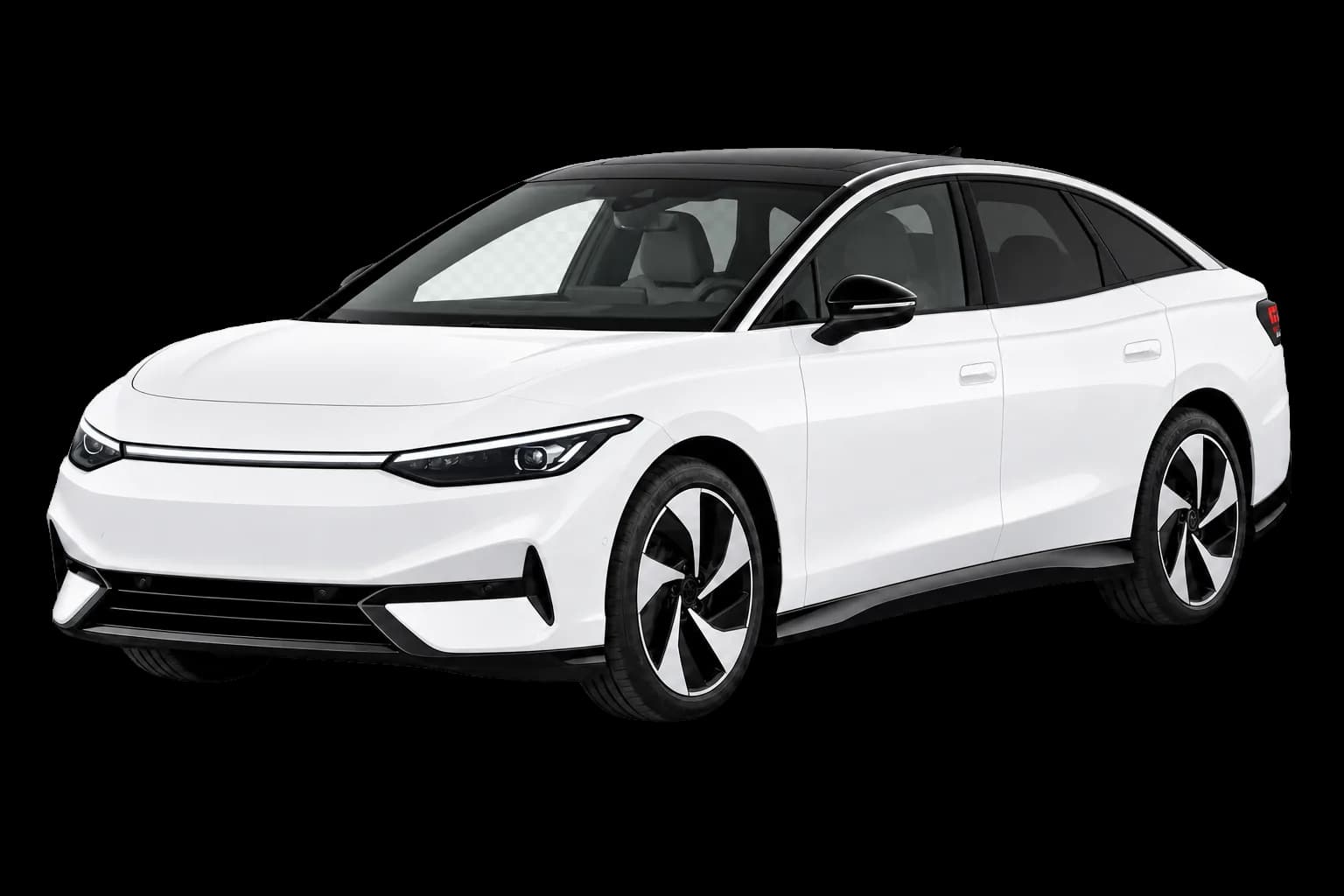
Variants & batteries at a glance
| Variant | Period (EU) | Usable capacity | Cell chemistry |
|---|---|---|---|
| ID.7 Pro (77 kWh) | since 10/2023 | 77 | NMC |
| ID.7 Pro S (86 kWh) | since 6/2024 | 86 | NMC |
| ID.7 Tourer (77 / 86 kWh) | since 6/2024 | 77 · 86 | NMC |
| GTX 4MOTION (86 kWh, all-wheel drive) | since 6/2024 | 86 | NMC |
ID.7 Pro (77 kWh) (since 10/2023)
| Period | net kWh | Chemistry | Cells |
|---|---|---|---|
| since 10/2023 | 77 | NMC | MEB pack (12 modules) from the Emden plant; VW publishes no official cell details, the community documents LG cells with NMC chemistry |
The launch variant with the efficient APP550 motor (210 kW) that powers every ID.7. Long-term series of its own are still missing — the MEB reference is the ADAC endurance test of the ID.3 Pro S: 93% at 102,505 km, 89% at 220,158 km.
AC 11 kW, DC up to 175 kW (10–80% in around 28 minutes).
Battery warranty for this variant: 8 years / 160,000 km (70% minimum capacity).
ID.7 Pro S (86 kWh) (since 6/2024)
| Period | net kWh | Chemistry | Cells |
|---|---|---|---|
| since 6/2024 | 86 | NMC | The biggest MEB pack (13 modules, also used in the long-wheelbase ID. Buzz) |
The range variant: up to 709 km WLTP. Too young for long-term figures; the 86 kWh battery has only been on the market since mid-2024.
AC 11 kW, DC up to 200 kW (10–80% in around 26 minutes).
Battery warranty for this variant: 8 years / 160,000 km (70% minimum capacity).
ID.7 Tourer (77 / 86 kWh) (since 6/2024)
| Period | net kWh | Chemistry | Cells |
|---|---|---|---|
| since 6/2024 (Tourer Pro) | 77 | NMC | Batteries identical to the saloon |
| since 6/2024 (Tourer Pro S) | 86 | NMC | Batteries identical to the saloon |
The estate dominates the listings: around three quarters of the used supply are Tourers. On the battery side everything matches the saloon.
AC 11 kW; DC 175 kW (77 kWh) or 200 kW (86 kWh).
Battery warranty for this variant: 8 years / 160,000 km (70% minimum capacity).
GTX 4MOTION (86 kWh, all-wheel drive) (since 6/2024)
| Period | net kWh | Chemistry | Cells |
|---|---|---|---|
| since 6/2024 (saloon and Tourer) | 86 | NMC | 86 kWh pack plus a second motor on the front axle — 250 kW system output |
The all-wheel-drive flagship as saloon and Tourer. Same battery as the Pro S, too young for long-term figures.
AC 11 kW, DC up to 200 kW (10–80% in around 26 minutes).
Battery warranty for this variant: 8 years / 160,000 km (70% minimum capacity).
The ID.7 is VW's electric flagship from Emden — and was Germany's most-registered EV of 2025 (34,563 new registrations, many of them commercial). That is what makes it interesting used: it falls fast from its high list price. Documented: a Pro for €40,485 against a new price above €60,000; the stock is young, averaging a good 11,000 km, and around three quarters are Tourers. An upper-class battery package with full remaining warranty — once two things are settled.
First: the right recall check
The headlines about the big 2026 MEB battery recall do not concern the ID.7 — that list holds ID.3, ID.4, ID.5 and ID. Buzz. What is relevant for the ID.7 is a small separate action: recall 93MU (KBA 15998R) over increased self-discharge of individual modules, production 2 September 2023 to 21 March 2024, 323 vehicles worldwide. Owners also report a service action replacing modules over faulty weld connections. With numbers this small, both are quickly checked: have a VW partner confirm the recall and action status against the VIN.
Second: the single-reading SoH trap
Like every ID model, the ID.7 can be read out via OBD (Car Scanner, 'maximum energy content' divided by 77 or 86 kWh). How misleading a single measurement can be is shown by a documented case from the ID community: seemingly below 72% SoH — correctly calculated, 90.3%. The BMS estimate fluctuates with charge level and temperature. Whoever buys or sells therefore needs the trend across several measurements, not the snapshot. Long-term data on the ID.7 itself is still missing; the platform reference (ADAC endurance test of the ID.3 Pro S) stands at 89% after 220,158 km.
What to check before buying
- VIN check at a VW partner: recall 93MU completed? Service actions open? Software up to date?
- Ask about the 12 V battery. The MEB-typical weak spot shows up on the ID.7 as app warnings or lost connectivity after days of standing — already replaced or updated is a plus.
- Charging test on the test drive. Isolated DC/AC charging aborts on early software versions are documented — plugging in once on AC and once on DC takes 20 minutes and settles a lot.
- Turn the depreciation into your chance. Almost a third of the listings are leasing offers and the supply is growing — negotiate with a documented battery state instead of list-price nostalgia. And if you sell again one day: the documented history is the argument that stops the discount.
Battery warranty
VW warrants the battery for 8 years with at least 70% remaining capacity. Mileage limits and exceptions are shown with the variants above and in the questions below.