Used BMW iX1: Battery, Variants, SoH
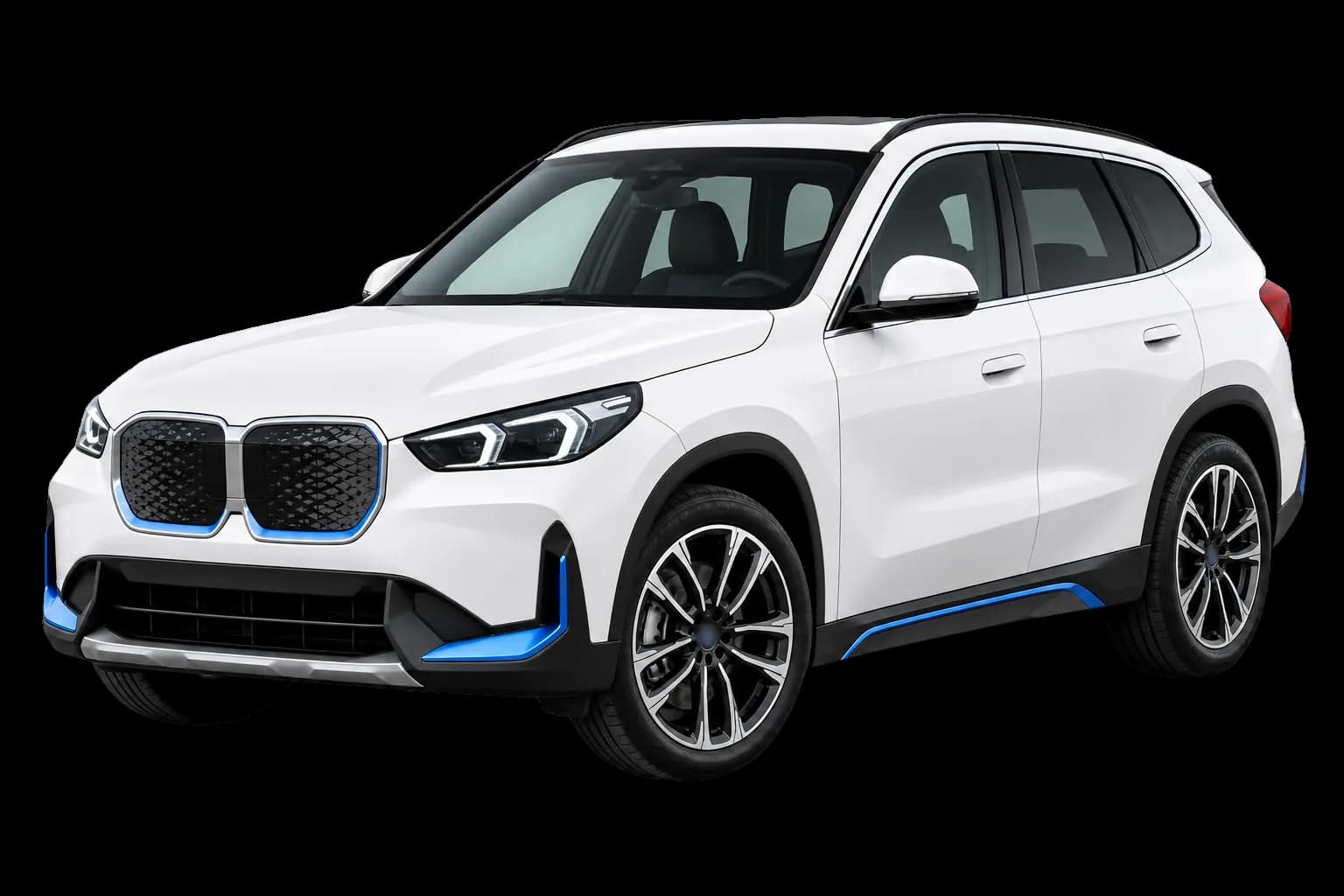
Variants & batteries at a glance
| Variant | Period (EU) | Usable capacity | Cell chemistry |
|---|---|---|---|
| xDrive30 (64.8 kWh, all-wheel drive) | 11/2022 – 1/2026 | 64.8 | NMC |
| eDrive20 (64.8 kWh, front-wheel drive) | 11/2023 – 1/2026 | 64.8 | NMC |
| Facelift (from 3/2026) | since 3/2026 | 65.0 – 65.2 | NMC |
xDrive30 (64.8 kWh, all-wheel drive) (11/2022 – 1/2026)
| Period | net kWh | Chemistry | Cells |
|---|---|---|---|
| 11/2022 – 1/2026 | 64.8 | NMC | BMW Gen5, prismatic cells; pack assembly and car production at the Regensburg plant (BMW quotes 64.78 kWh net) |
The launch variant with 230 kW boost output. Documented CarData readings scatter widely: one car at 92.7% after 32,442 km, another showing a flat 100% at 57,164 km — the BMS self-report loses calibration points without occasional full cycles. That is why the trend matters, not the single value.
AC 11 kW as standard (22 kW optional), DC up to 130 kW — 10–80% in 29 minutes per data sheet, the ADAC measured 28.
Battery warranty for this variant: 8 years / 160,000 km (70% minimum capacity).
eDrive20 (64.8 kWh, front-wheel drive) (11/2023 – 1/2026)
| Period | net kWh | Chemistry | Cells |
|---|---|---|---|
| 11/2023 – 1/2026 | 64.8 | NMC | Identical Gen5 battery to the xDrive30, one motor with 150 kW |
The cheaper entry point from November 2023 — same battery, more range (463 km WLTP) thanks to lower consumption. Too young for long-term figures of its own.
AC 11 kW as standard (22 kW optional), DC up to 130 kW (10–80% in 29 minutes).
Battery warranty for this variant: 8 years / 160,000 km (70% minimum capacity).
Facelift (from 3/2026) (since 3/2026)
| Period | net kWh | Chemistry | Cells |
|---|---|---|---|
| since 3/2026 | 65.0 – 65.2 | NMC | Same gross battery, slightly more usable capacity; the big range gains (eDrive20: 514 km WLTP) come from efficiency |
The facelift brings no battery leap: DC stays at 130 kW — the 800-volt technology is reserved for the Neue Klasse. On the used market the facelift plays no role yet.
Unchanged: AC 11 kW (22 kW optional), DC 130 kW (10–80% in 29 minutes).
Battery warranty for this variant: 8 years / 160,000 km (70% minimum capacity).
The iX1 is BMW's compact volume EV from Regensburg — Gen5 battery, built since November 2022, among the ten most-registered EVs of 2023. Now the leasing returns are flowing into the market: 2022 cars average around €35,000, entry prices sit around €31,000, against new prices from €47,900. The iX1 brings one peculiarity with it: its own condition self-report scatters like almost no other model's.
One battery, two drivetrains — and a scattering self-report
On the battery side the iX1 is simple: eDrive20 and xDrive30 share the same 64.8 kWh pack (BMW quotes 64.78 kWh net), and both DC-charge at 130 kW. Reading it out is where it gets interesting: documented is an iX1 at 92.7% SoH at 32,442 km — and next to it one showing a flat 100% at 57,164 km. Both are BMS estimates from BMW CarData; without occasional full cycles the system lacks calibration points. The battery generation itself is vouched for by AUTO BILD's iX3 endurance test (practically full capacity after 100,000 km, confirmed by a Dekra quick test). The lesson for buyers and sellers alike: a single reading is worth particularly little on the iX1 — the trend decides.
Recalls: nothing dramatic, but three VIN checks
The drive-shaft recall covers all iX1 built before August 2023 (documented: loss of drive while moving), the 2025 B-pillar recall a narrow production window in autumn 2024, and the Europe-wide cell-module notice SR/02913/25 names the 'X1 with high-voltage battery' alongside i4, i7 and iX — whether individual iX1 are covered could not be conclusively established. A BMW partner answers all three via a VIN query in minutes.
What to check before buying
- Have a VIN query run: drive-shaft action completed? B-pillar recall relevant? Cell-module notice checked?
- Ask the seller for the SoH — via the CarData export ('energy content of the high-voltage battery' or SOCE) or the EVScanner app; since August 2025 there is alternatively the battery check with certificate at a BMW partner.
- Put charging aborts in context. One documented AC abort at 80% was down to the charging post's firmware, not the car — charging once on AC and once on DC during the test drive settles it.
- Trend over snapshot. Precisely because the iX1's BMS self-report demonstrably scatters, the history over weeks is the only robust picture — and at resale it is the argument against the blanket discount.
Battery warranty
BMW warrants the battery for 8 years with at least 70% remaining capacity. Mileage limits and exceptions are shown with the variants above and in the questions below.