Used Cupra Born: Battery, Variants, SoH
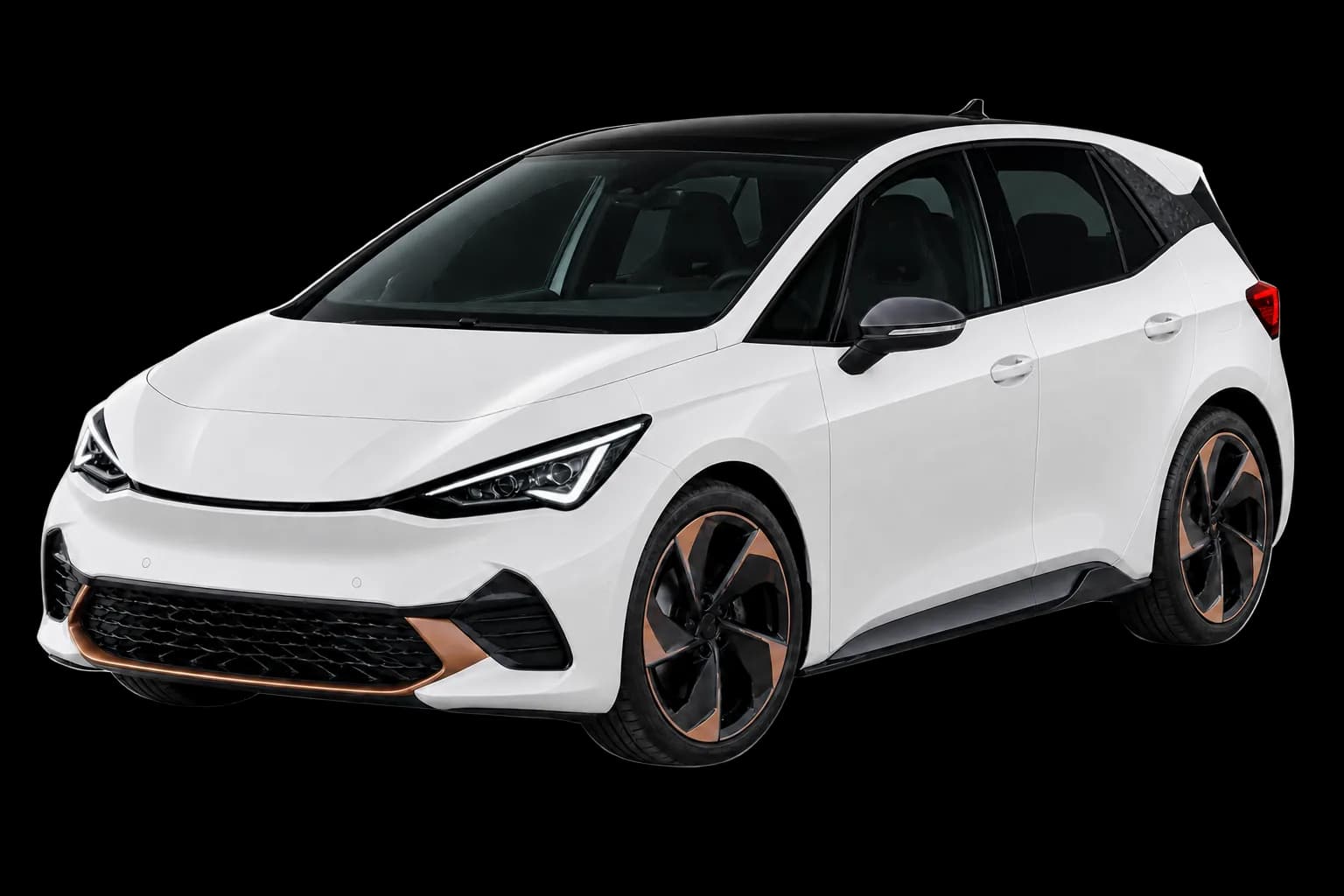
Variants & batteries at a glance
| Variant | Period (EU) | Usable capacity | Cell chemistry |
|---|---|---|---|
| Born 58 kWh (150 kW / e-Boost 170 kW) | 2021 – 5/2024 | 58 | NMC |
| Born 77 kWh e-Boost (170 kW) | 2/2022 – 5/2024 | 77 | NMC |
| Refresh: 60 / 77 kWh | since mid-2024 | 60 · 77 | NMC |
| Born VZ (79 kWh, 240 kW) | 6/2024 – 2026 | 79 | NMC |
Born 58 kWh (150 kW / e-Boost 170 kW) (2021 – 5/2024)
| Period | net kWh | Chemistry | Cells |
|---|---|---|---|
| 2021 – 5/2024 | 58 | NMC | MEB pack (Zwickau plant), same battery size as the VW ID.3 Pro |
The most common variant on the used market. Useful context: an announced 45 kWh base version never reached production — every used Born has at least the 58 kWh pack.
AC 11 kW, DC 120 kW from the factory; over-the-air updates unlocked up to 134 kW on some cars. Real-world power in the 10–80% window is often lower — ask about the software level when buying.
Battery warranty for this variant: 8 years / 160,000 km (70% minimum capacity).
Born 77 kWh e-Boost (170 kW) (2/2022 – 5/2024)
| Period | net kWh | Chemistry | Cells |
|---|---|---|---|
| 2/2022 – 5/2024 | 77 | NMC | MEB pack, same battery size as the VW ID.3 Pro S; four-seater only |
The big pack benefits from the best MEB reference there is: in the ADAC endurance test of the ID.3 Pro S with the same battery size, the SoH stood at around 91% after 170,000 km and roughly 89% after 220,000 km.
AC 11 kW; DC initially quoted at 135 kW, later data sheets for the same build period state 170 kW — the increase came via model year and software. What counts is the actual level of the specific car.
Battery warranty for this variant: 8 years / 160,000 km (70% minimum capacity).
Refresh: 60 / 77 kWh (since mid-2024)
| Period | net kWh | Chemistry | Cells |
|---|---|---|---|
| from mid-2024 (60) | 60 | NMC | MEB pack (the 60 kWh battery premiered in the Born) |
| from mid-2024 (77) | 77 | NMC | MEB pack |
With the refresh, the 60 kWh battery replaced the 58; charging power rose considerably. These build years are still too young for long-term figures.
DC: 60 kWh up to 165 kW (10–80% in 24 minutes), 77 kWh up to 175 kW (26 minutes). AC 11 kW.
Battery warranty for this variant: 8 years / 160,000 km (70% minimum capacity).
Born VZ (79 kWh, 240 kW) (6/2024 – 2026)
| Period | net kWh | Chemistry | Cells |
|---|---|---|---|
| 6/2024 – 2026 | 79 | NMC | MEB pack with the 240 kW rear motor (APP550) |
The flagship with 594 km WLTP range — still rare and young on the used market.
DC up to 185 kW (10–80% in 28 minutes), AC 11 kW.
Battery warranty for this variant: 8 years / 160,000 km (70% minimum capacity).
The Born is the sporty MEB twin of the VW ID.3 (same platform, same Zwickau plant, same battery sizes) and noticeably affordable used: early 58 kWh examples start below €20,000, with the 2022/2023 vintages averaging €25,000 to €27,000. On the battery side a mandatory task awaits the buyer — and an unusually good body of data.
The mandatory task: recall action 93S4
The large MEB battery recall over possibly out-of-spec modules covers 19,452 Born from production February 2022 to April 2024 (KBA 16269R). The garage installs an update, checks the modules and replaces them if needed; until the visit, charging time and range are restricted as a precaution per the recall letter. For used buyers that means simply: for any Born from this window, demand proof that action 93S4 has been carried out — a two-line confirmation from Cupra service.
The data: the best-documented battery platform
Born-specific long-term series are still missing, but the MEB reference base is strong: the ADAC endurance test of the ID.3 Pro S with the same 77 kWh battery size shows around 91% SoH after 170,000 km and still roughly 89% after 220,000 km; a fleet evaluation of nearly 10,000 battery tests puts the ID.3 at an average of 91.8% beyond 100,000 km. Cupra's warranty is also unusually transparently staggered: at least 78% up to 3 years/60,000 km, 74% up to 5 years/100,000 km, 70% up to 8 years/160,000 km.
What to check before buying
- Proof of 93S4 (see above) — cars from mid-2024 onwards and the VZ are outside the window.
- Clarify software and charging level. The 58 charged at 120 kW from the factory, partly 134 kW after over-the-air updates; the 77's figure grew from 135 to 170 kW. Only the specific car's software level tells you what it can do — not the model year's data sheet.
- Budget for the 12 V battery. The MEB-typical weak spot; documented failures up to a car that would no longer unlock.
- Document the SoH — as a trend, not a single value. The OBD read-out ('maximum energy content' via Car Scanner) works as on the ID.3 but fluctuates with temperature. The state only becomes robust as a history over weeks — that is what a history-based certificate documents.
Battery warranty
Cupra warrants the battery for 8 years with at least 70% remaining capacity. Mileage limits and exceptions are shown with the variants above and in the questions below.