Used Hyundai Kona Electric: Battery, Variants, SoH
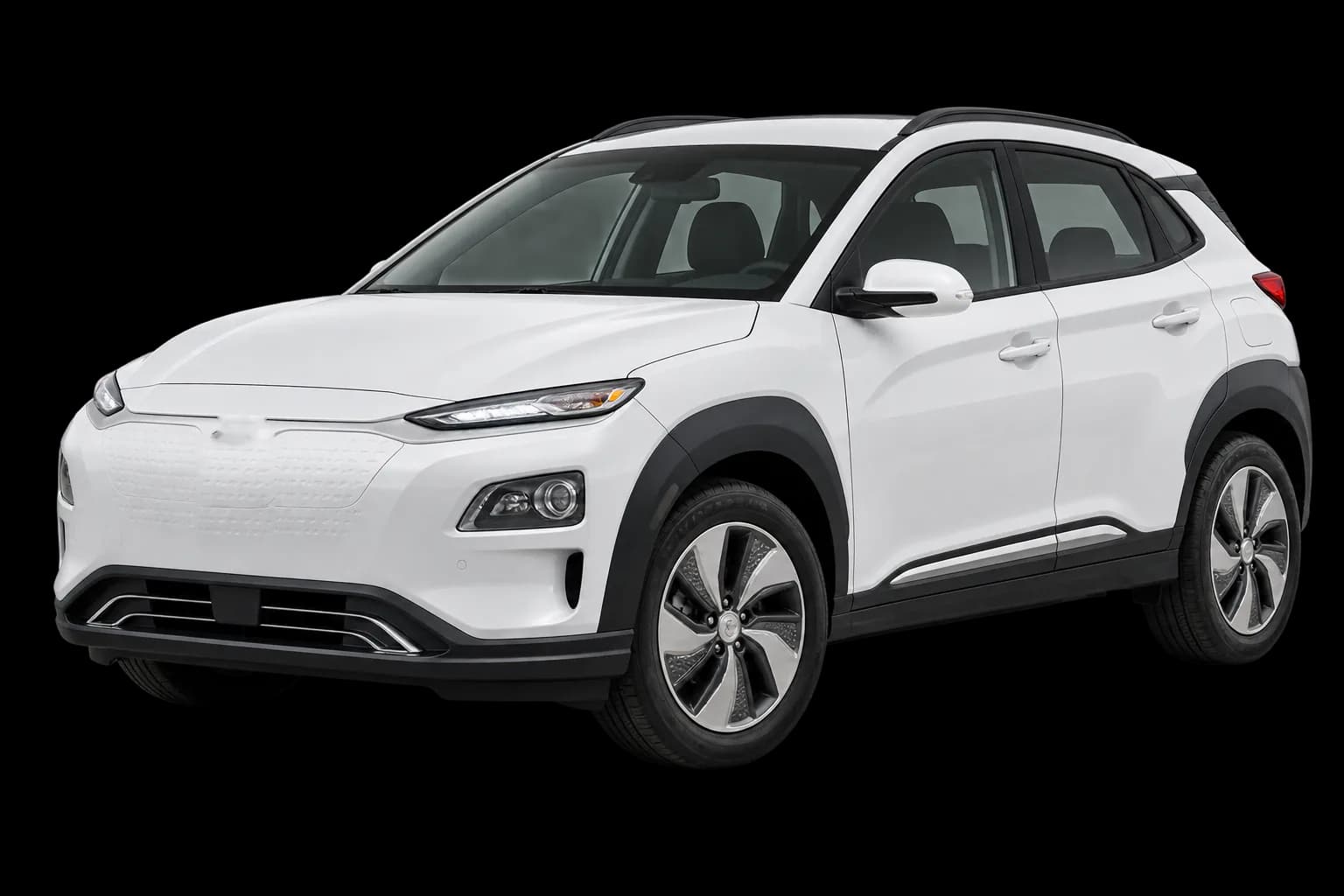
Variants & batteries at a glance
| Variant | Period (EU) | Usable capacity | Cell chemistry |
|---|---|---|---|
| Gen1 pre-facelift (39.2 / 64 kWh) | 8/2018 – 12/2020 | 39.2 · 64.0 | NMC |
| Facelift 64 kWh | 1/2021 – 8/2023 | 64.0 | NMC |
| Facelift 39.2 kWh | 2/2021 – 8/2023 | 39.2 | NMC |
| Gen2 (48.4 / 65.4 kWh) | since 10/2023 | 48.4 (gross) · 65.4 (gross) | NMC |
Gen1 pre-facelift (39.2 / 64 kWh) (8/2018 – 12/2020)
| Period | net kWh | Chemistry | Cells |
|---|---|---|---|
| 8/2018 – 12/2020 (39.2 kWh) | 39.2 | NMC | LG Chem cells from Korean production (Ulsan) |
| 8/2018 – 12/2020 (64 kWh) | 64.0 | NMC | LG Chem (Ulsan); from spring 2020 also built in Czechia with SK Innovation cells — those cars were never part of the battery-replacement recall |
The recall generation (see FAQ) — and at the same time the one with the most generous warranty: up to model year 2019 it was 8 years/200,000 km, from model year 2020 it is 160,000 km. The first examples fall out of warranty from mid-2026 — from then on, only the documented state counts.
AC single-phase only at 7.2 kW — the biggest everyday difference to the facelift; DC CCS up to 100 kW (80% in 54 minutes per the ADAC measurement). No smartphone app connectivity from the factory.
Battery warranty for this variant: 8 years / 200,000 km (70% minimum capacity).
Facelift 64 kWh (1/2021 – 8/2023)
| Period | net kWh | Chemistry | Cells |
|---|---|---|---|
| 1/2021 – 8/2023 | 64.0 | NMC | Lithium nickel-manganese-cobalt per the ADAC data sheet |
The most sought-after variant: 484 km WLTP, now with an 11 kW three-phase charger. Gen1 as a whole delivers the top value of the big fleet evaluation: 97.18% remaining capacity beyond 100,000 km.
AC 11 kW three-phase, DC up to 100 kW (80% in 47 minutes).
Battery warranty for this variant: 8 years / 160,000 km (70% minimum capacity).
Facelift 39.2 kWh (2/2021 – 8/2023)
| Period | net kWh | Chemistry | Cells |
|---|---|---|---|
| 2/2021 – 8/2023 | 39.2 | NMC | Smaller pack, same technology; 305 km WLTP |
The frugal one: 14.3 kWh/100 km rated consumption. On the used market one of the cheapest ways into an EV with a documented, robust battery base.
AC 11 kW, DC up to 100 kW (80% in around 47 minutes).
Battery warranty for this variant: 8 years / 160,000 km (70% minimum capacity).
Gen2 (48.4 / 65.4 kWh) (since 10/2023)
| Period | net kWh | Chemistry | Cells |
|---|---|---|---|
| since 10/2023 (48.4 kWh) | 48.4 (gross) | NMC | Cells by LG Energy Solution from Wrocław, assembly in Czechia; Hyundai states no separate net figure |
| since 10/2023 (65.4 kWh) | 65.4 (gross) | NMC | Cells by LG Energy Solution from Wrocław — not CATL, as often assumed |
The second generation (up to 513 km WLTP) with battery preconditioning as standard. Too young for long-term figures; one documented ICCU failure (charger/12 V converter) remained a single case in the forum — Gen1 does not have that component at all.
AC 11 kW; DC 74 kW (48.4 kWh) or 102 kW (65.4 kWh) — 10–80% in around 41 minutes either way.
Battery warranty for this variant: 8 years / 160,000 km (70% minimum capacity).
The Kona Electric is the used market's quiet long-distance hero: in the big fleet evaluation it holds an average of 97.18% remaining capacity beyond 100,000 km — one of the top values overall. And it is cheap: 39.2 kWh examples start around €13,600, the sought-after 64 kWh version around €16,000. Two chapters a buyer still has to know: the big battery-replacement recall, and the onboard computer's tendency to flatter.
The replacement jackpot: recall history as a value factor
After the 2021 worldwide recall (82,000 vehicles, in Germany 6,254 Kona from production January 2018 to March 2020), Hyundai replaced conspicuous batteries completely — and owners document a broad replacement campaign beyond that under code HY10643. A replaced Gen1 drives with a battery years younger than its build year says — the same effect that makes the Mercedes EQA's swapped cars the quiet winners. Clarify the status: check the service records for HY10643/010314 or have a dealer query the VIN. And since March 2026 a BMS software recall has been running on top (13,523 vehicles in Germany, code 61D004) — that belongs in the paperwork check too.
97.18% on average — and still scepticism at '100%'
The fleet data clearly favours the Kona. For the individual car, caution still applies: the Hyundai BMS often shows a flat 100% SoH for years — experts warn against such dream values from generously interpreted onboard read-outs, and an outlier at 80% after only 28,225 km is documented too. A strong model family does not replace proof for the specific car — it only makes it more likely to be good.
What to check before buying
- Clarify the recall history via the VIN: battery replacement (HY10643/010314) documented? The 2026 BMS recall 61D004 done? A documented replacement is a selling point, not a flaw.
- Do the warranty maths. Up to model year 2019: 200,000 km, from model year 2020: 160,000 km — but the first 2018 cars fall out of the 8 years from mid-2026. Buying an early Kona means buying the state, not the warranty.
- Know the pre-facelift quirks: AC charges single-phase at 7.2 kW only, and there is no app connectivity from the factory — relevant for kerbside charging at Type 2 posts. The facelift (from 2021) charges three-phase at 11 kW.
- Measure the SoH instead of believing it. Car Scanner with an ELM327 V2.3 dongle or the dealer printout deliver the value in minutes — it becomes meaningful as a trend across several measurements, not as a one-off 100% display.
Battery warranty
Hyundai warrants the battery for 8 years with at least 70% remaining capacity. Mileage limits and exceptions are shown with the variants above and in the questions below.