Used Mercedes EQA: Battery, Variants, SoH
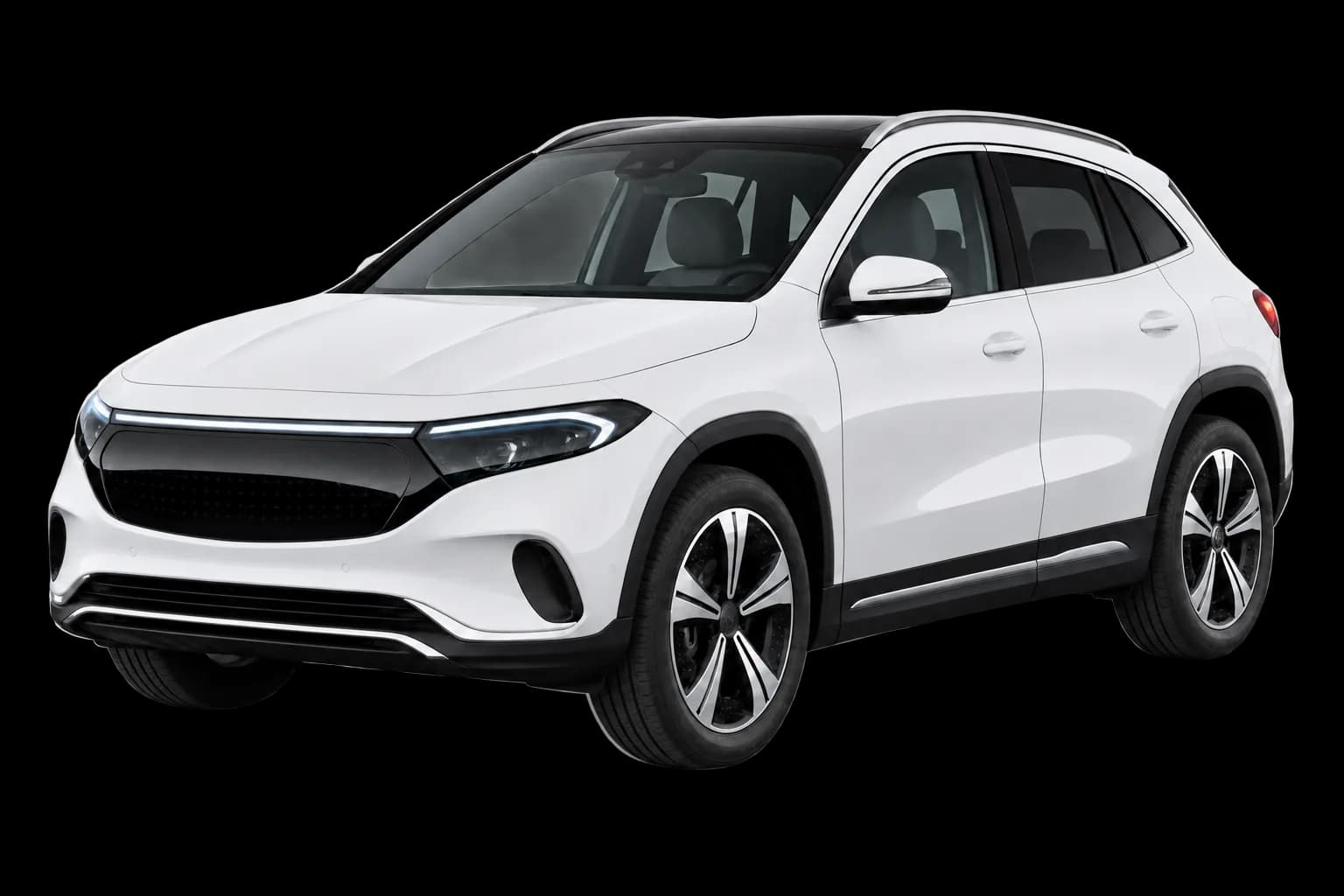
Variants & batteries at a glance
| Variant | Period (EU) | Usable capacity | Cell chemistry |
|---|---|---|---|
| EQA 250 (66.5 kWh) | 2021 – 2025 | 66.5 | NMC |
| EQA 250+ (70.5 kWh) | since 6/2022 | 70.5 | NMC |
| EQA 300 / 350 4MATIC | 2021 – today | 66.5 · 70.5 | NMC |
| Facelift (from early 2024) | since 2024 | 66.5 / 70.5 | NMC |
EQA 250 (66.5 kWh) (2021 – 2025)
| Period | net kWh | Chemistry | Cells |
|---|---|---|---|
| 2021 – 2025 | 66.5 | NMC | Lithium NMC; cell suppliers named by Mercedes: CATL and SK On |
The volume variant. Early build years (until 2022) use an asynchronous motor, later cars a more efficient synchronous motor — the battery stayed the same. One documented owner value for context: 96.2% SoH after 5 years and around 80,000 km.
AC 11 kW, DC 100 kW per factory spec — the ADAC measured peaks up to 110 kW, 10–80% in 29 minutes. Heat pump as standard.
Battery warranty for this variant: 8 years / 160,000 km (70% minimum capacity).
EQA 250+ (70.5 kWh) (since 6/2022)
| Period | net kWh | Chemistry | Cells |
|---|---|---|---|
| since 6/2022 | 70.5 | NMC | Lithium NMC, cells by Farasis (subject of the battery-replacement recall) |
The long-range flagship — and the variant with the most important buying check: the 70.5 kWh Farasis battery (production 02/2021–07/2024) is covered by a recall with a free battery replacement. A 250+ that has already been swapped drives with a factory-new battery — potentially a used car with a new-car pack.
AC 11 kW, DC around 100 kW, 10–80% in roughly 35 minutes.
Battery warranty for this variant: 8 years / 160,000 km (70% minimum capacity).
EQA 300 / 350 4MATIC (2021 – today)
| Period | net kWh | Chemistry | Cells |
|---|---|---|---|
| 2021 – 8/2024 | 66.5 | NMC | Lithium NMC |
| 350 from 9/2024 | 70.5 | NMC | Lithium NMC |
The all-wheel-drive versions use the 250's 66.5 kWh battery until 2024; from September 2024 the 350 4MATIC received the larger 70.5 kWh pack (range up from 458 to 476 km WLTP).
AC 11 kW, DC up to 100 kW — including with the larger battery.
Battery warranty for this variant: 8 years / 160,000 km (70% minimum capacity).
Facelift (from early 2024) (since 2024)
| Period | net kWh | Chemistry | Cells |
|---|---|---|---|
| since 2024 | 66.5 / 70.5 | NMC | Lithium NMC |
The facelift changed neither battery nor charging power — the range gains (250+ up to 560 km WLTP) come from aerodynamics and tyres. Plug & Charge is new.
Unchanged: AC 11 kW, DC 100 kW.
Battery warranty for this variant: 8 years / 160,000 km (70% minimum capacity).
The EQA is Mercedes' compact entry into the electric world and is now widely available used: 2021 cars from around €24,000, with the bulk of 2021 and 2022 examples between €24,000 and €39,500. On the battery side the EQA is a special case in two ways — with the segment's most important recall topic and the most restrictive read-out policy.
The one question you must ask about the 250+
The EQA 250+ with the large 70.5 kWh battery (Farasis cells, production February 2021 to July 2024) is subject to a recall over possible short circuits: Mercedes replaces the high-voltage battery free of charge (51,729 vehicles worldwide, KBA 16136R). For used buyers this cuts both ways:
- Before the swap, the recommendation is to charge to no more than 80% and park outdoors — and the first BMS software update (February 2025) cost noticeable usable capacity and 25 to 55 km of range.
- After the swap, the car drives with a factory-new battery — a replaced 250+ can be the quiet winner of the used market.
So get the recall status in writing: affected yes/no, battery replaced yes/no.
Mercedes' factory battery certificate — and its conditions
Every EQA comes with a battery certificate from the factory: 8 years or 160,000 km, phrased as a minimum charge quantity (133 Ah depending on battery code — around 70% by the ADAC's reckoning). It transfers on sale. Two conditions are worth checking as a used buyer: complete servicing per the manufacturer schedule, and that the battery never sat fully discharged for more than two weeks.
Reading the SoH: not a DIY job on the EQA
Unlike VW (OBD dongle) or BMW, Mercedes blocks the OBD port for third-party apps — and shows the owner the SoH nowhere. The value comes only from garage diagnostics at a Mercedes partner or from a manufacturer-independent battery test; on certified used cars the Junge Sterne health certificate documents it. Documented owner values are unremarkable (96.2% after 5 years/80,000 km), but a public long-term series like the ID.3's does not exist.
That is why the history matters on the EQA: where the snapshot requires a garage appointment, continuous observation over weeks makes the state visible without a diagnostics session — and provable at the point of sale.
Battery warranty
Mercedes-Benz warrants the battery for 8 years with at least 70% remaining capacity. Mileage limits and exceptions are shown with the variants above and in the questions below.