Used Tesla Model S: Battery, Variants, SoH
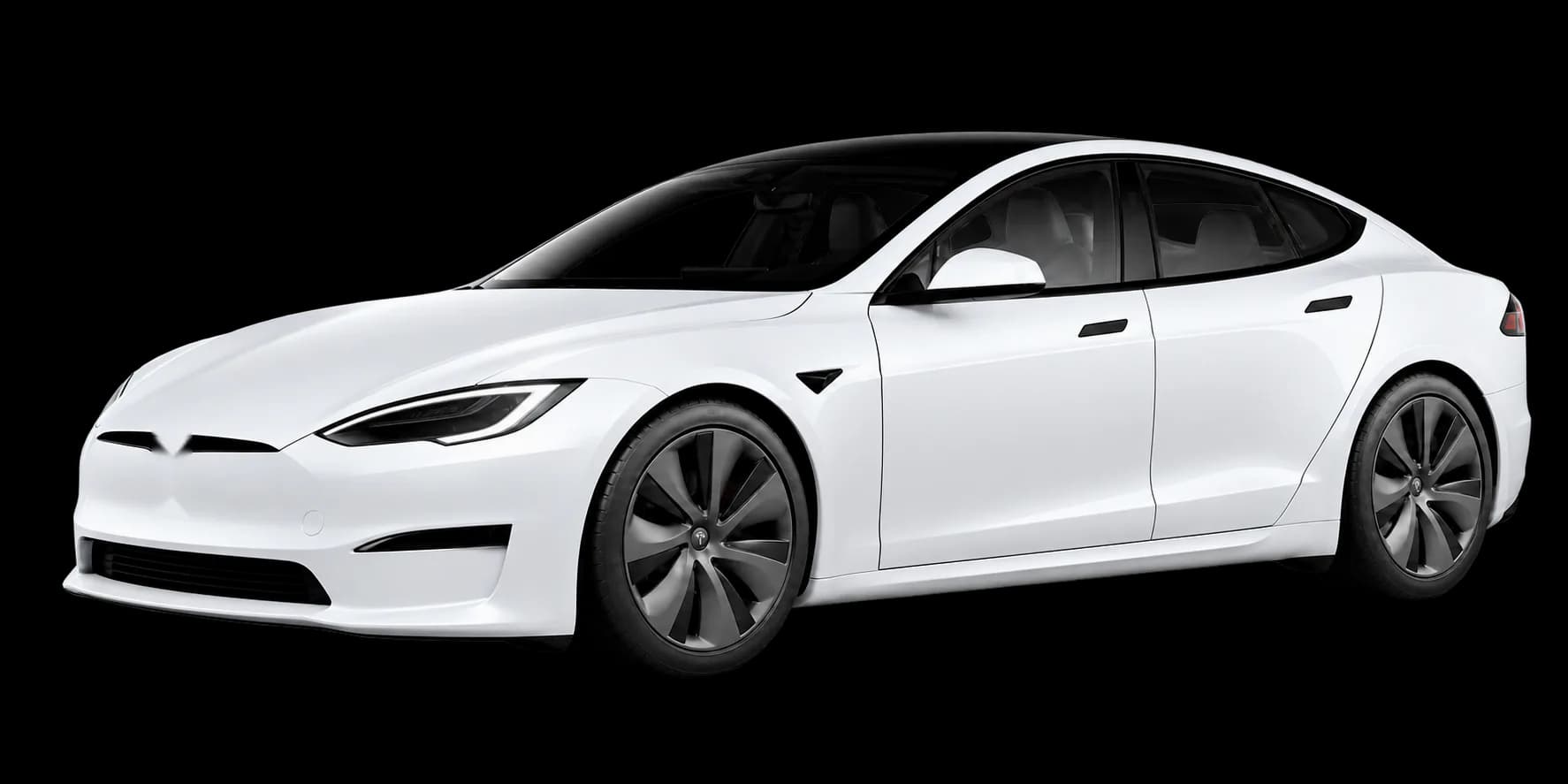
Variants & batteries at a glance
| Variant | Period (EU) | Usable capacity | Cell chemistry |
|---|---|---|---|
| Early 18650 era (60, 70, 85, 90) | 2013 – 2016 | approx. 58 (thin sourcing) · approx. 77–81 (sources disagree) · approx. 66 · approx. 85 when new | NCA |
| 75D, 60 (software-locked) & 100D / P100D | 2016 – early 2019 | approx. 72.5 · approx. 62, limited in software (unlockable to 75) · 95–98 (sources disagree) | NCA |
| Raven Long Range / Performance | 04/2019 – 2020 | 95–98 | NCA |
| Palladium facelift Long Range / Plaid | German deliveries from 12/2022 | 95 | NCA |
Early 18650 era (60, 70, 85, 90) (2013 – 2016)
| Period | net kWh | Chemistry | Cells |
|---|---|---|---|
| 2013 – 2015 (S60) | approx. 58 (thin sourcing) | NCA | Panasonic 18650 |
| 2013 – 2016 (85, P85, 85D, P85D) | approx. 77–81 (sources disagree) | NCA | Panasonic 18650, 7,104 cells |
| 2015 – 2016 (70, 70D) | approx. 66 | NCA | Panasonic 18650 |
| 2015 – 2016 (90D, P90D) | approx. 85 when new | NCA | Panasonic 18650 |
The 90 packs are the risk group of this era: analysed fleet data shows them degrading roughly twice as fast as the 85s. Early 85s (2013–2015) were replaced under warranty more often than average — a documented replacement pack is a plus when buying used, not a blemish.
Important when measuring: the 85 pack never really held 85 kWh — teardowns measured around 81 kWh gross. SoH figures depend heavily on which reference value is used.
75D, 60 (software-locked) & 100D / P100D (2016 – early 2019)
| Period | net kWh | Chemistry | Cells |
|---|---|---|---|
| 2016 – 2019 (75, 75D) | approx. 72.5 | NCA | Panasonic 18650 |
| 2016 – 2017 (60, 60D — physically a 75 pack) | approx. 62, limited in software (unlockable to 75) | NCA | Panasonic 18650 |
| from late 2016 (100D, P100D) | 95–98 (sources disagree) | NCA | Panasonic 18650, 8,256 cells |
Fleet data rates the 100 pack as the most robust of the 18650 era. On a 2016/17 S60 or 60D it is worth checking the lock status: many were never unlocked to the full 75 kWh — hidden upgrade potential in an ad.
Raven Long Range / Performance (04/2019 – 2020)
| Period | net kWh | Chemistry | Cells |
|---|---|---|---|
| 2019 – 2020 | 95–98 | NCA | Panasonic 18650 |
The same 100 pack as before, but with a more efficient drivetrain (permanent-magnet front motor) and faster charging at up to 200 kW. Mind the market gap: no new Model S were delivered in Europe from 2021 until late 2022 — cars first registered in those years are usually stock or import vehicles.
Many Raven cars were bought before the warranty cut-off at the end of January 2020 — those have 8 years with no mileage limit (see the FAQ).
Palladium facelift Long Range / Plaid (German deliveries from 12/2022)
| Period | net kWh | Chemistry | Cells |
|---|---|---|---|
| from 12/2022 | 95 | NCA | Panasonic 18650, 7,920 cells |
A completely reworked architecture with a modern BMS, still using 18650 cells. Too young for long-term statements on the used market; the first lease returns arrive in 2026/2027.
Battery warranty for this variant: 8 years / 240,000 km (70% minimum capacity).
The Model S is the oldest Tesla stock on the German market — and therefore the model where the battery question moves the most money: most cars first registered up to mid-2018 are now out of battery warranty, good 18650 examples start at around €15,000, and the gap between a well-kept 100D and a tired 90 is one you cannot see in the ad.
Reading the SoH on a Model S
The routes are the same as on the Model 3 and Y — from the built-in battery health test to an independent certificate; the full comparison is in our guide checking Tesla battery health. One thing is specific to the Model S: on 85s and 90s with their eventful software history, the range display is an especially weak indicator — what counts here is a real capacity measurement, or better, a history.
On the Model S, Akkubrief comes with a limit we would rather state up front: we issue for the 75 pack (2016–2019) and for the Palladium generation (Plaid from 2021, Long Range from 2022). For the 60, 70, 85, 90 and 100 packs and for the Raven years we have no sourced figure for how much the battery held when new — and without the second half of the sum we do not guess, we issue nothing. You can still connect the car and follow its history.
What to look for when buying used
First establish which warranty regime applies — it depends on the first owner's purchase date, not the model year (details in the FAQ). A Raven bought at the end of 2019 still has warranty cover with no mileage limit; an identical car bought from February 2020 is running against the 240,000 km limit. After that: ask about the battery's replacement history (a replacement pack is a plus), check the software lock status on a 2016/17 S60, and measure 90 packs especially carefully. And for every car out of warranty: without solid battery proof, you are buying the most expensive component blind.
Battery warranty
Tesla warrants the battery for 8 years with at least 70% remaining capacity. Mileage limits and exceptions are shown with the variants above and in the questions below.