Used VW ID.3: Battery, Variants, SoH & the ADAC Endurance Test
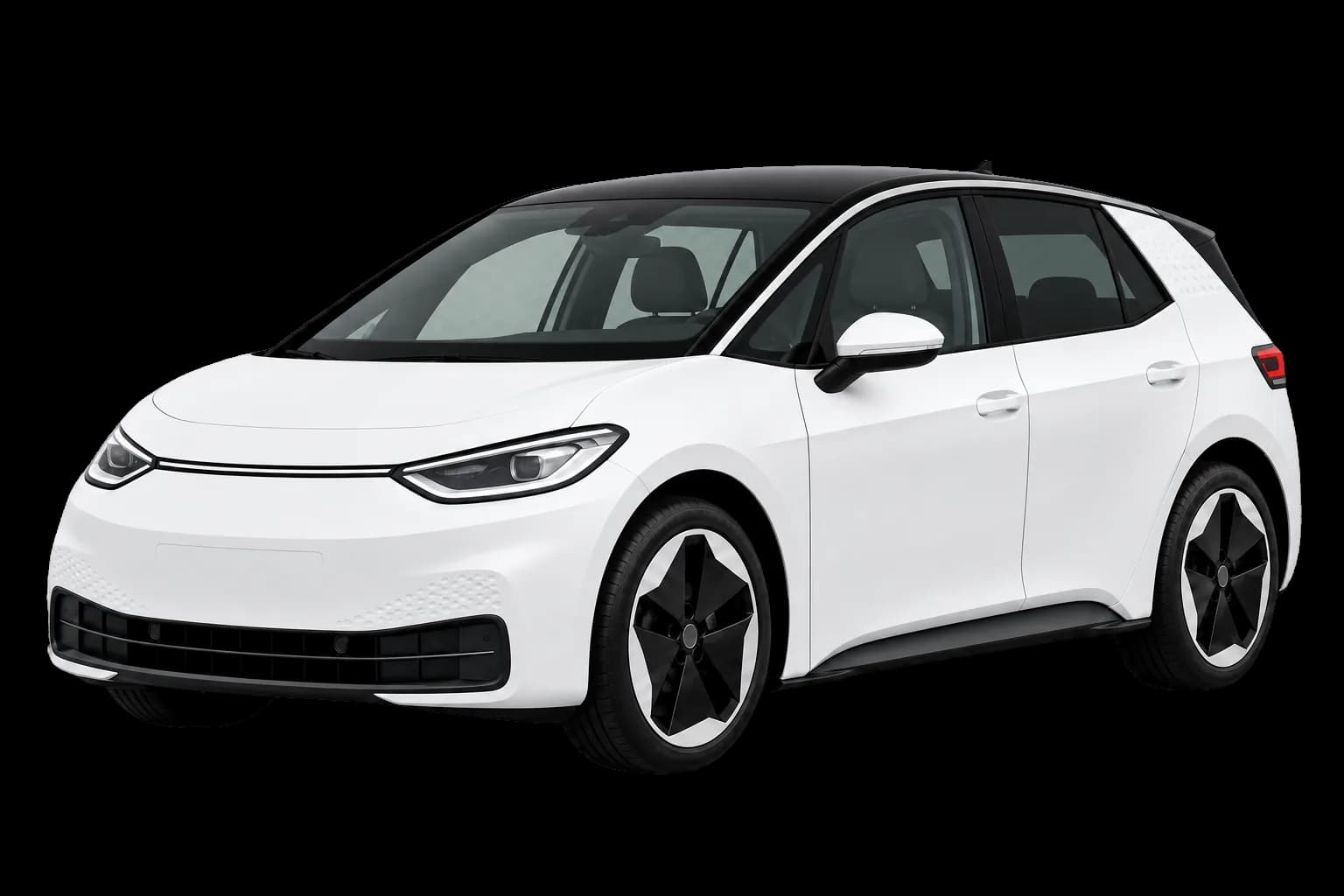
Variants & batteries at a glance
| Variant | Period (EU) | Usable capacity | Cell chemistry |
|---|---|---|---|
| Pure / Pure Performance (45 kWh) | 2021 – 2021/22 | 45 | NMC |
| Pro / Pro Performance (58 kWh) | 2020 – 2024 | 58 | NMC |
| Pro S (77 kWh) | 2020 – 2024 | 77 | NMC |
| Updated range from 5/2024 (Pure / Pro / Pro S / GTX) | since 5/2024 | 52 · 59 · 77 – 79 | NMC |
Pure / Pure Performance (45 kWh) (2021 – 2021/22)
| Period | net kWh | Chemistry | Cells |
|---|---|---|---|
| 2021 – 2021/22 | 45 | NMC | LG Chem E78 (NMC 712), pouch, 8 modules |
The smallest battery was only briefly on offer and was dropped again in autumn 2021 — so these cars are rare on the used market. Technically it uses the same cell format as the larger Pro, just with fewer modules.
AC only two-phase at 7.2 kW, DC 50 kW as standard, optionally up to 100–110 kW. Check the charging power before you buy — the early base model charges noticeably more slowly than the rest of the range.
Battery warranty for this variant: 8 years / 160,000 km (70% minimum capacity).
Pro / Pro Performance (58 kWh) (2020 – 2024)
| Period | net kWh | Chemistry | Cells |
|---|---|---|---|
| 2020 – 2024 | 58 | NMC | LG Chem E78 (NMC 712), pouch, 9 modules (108s2p); later also SK (NMC 811) |
The 58 kWh Pro is the most common variant on the used market and a good compromise between price and range. As with all MEB batteries, VW recommends an everyday charge limit of 80 percent; one or two full charges a year calibrate the display.
DC charging 100–120 kW from the factory, slightly higher with ID. Software 3.0 (from 2022) depending on model year. AC 11 kW.
Battery warranty for this variant: 8 years / 160,000 km (70% minimum capacity).
Pro S (77 kWh) (2020 – 2024)
| Period | net kWh | Chemistry | Cells |
|---|---|---|---|
| 2020 – 2024 | 77 | NMC | LG Chem E78 (NMC 712), pouch, 12 modules (96s3p) |
This is the variant from the ADAC endurance test: after a good 160,000 km the SoH stood at around 91 percent — despite regular charging to 100 percent and a lot of fast charging (details in the questions below). That makes the big pack the best-documented battery in the entire compact class.
DC 125 kW from the factory, over 160 kW in the ADAC test car after software 3.x. AC 11 kW.
Battery warranty for this variant: 8 years / 160,000 km (70% minimum capacity).
Updated range from 5/2024 (Pure / Pro / Pro S / GTX) (since 5/2024)
| Period | net kWh | Chemistry | Cells |
|---|---|---|---|
| from 5/2024 (Pure) | 52 | NMC | MEB pack, NMC |
| from 5/2024 (Pro) | 59 | NMC | MEB pack, NMC |
| from 5/2024 (Pro S / GTX) | 77 – 79 | NMC | MEB pack, NMC |
The 2024 update mainly raised charging power (Pure 145 kW, Pro 165 kW, Pro S and GTX 175 kW). These cars are still too young for long-term statements on the used market; the cell technology stays within the MEB family.
Much faster DC charging than the first generation — 145 to 175 kW depending on version.
Battery warranty for this variant: 8 years / 160,000 km (70% minimum capacity).
The ID.3 was Volkswagen's first purpose-built electric car on the MEB platform in 2020 and is today one of the most common compact EVs on the German used market. Prices for early model years run roughly between €17,500 and €29,000 depending on variant and condition. On the battery, the evidence is unusually good — unlike many competitors, there is a real long-distance data point.
What the 160,000 km endurance test shows
The ADAC drove an ID.3 Pro S for 160,000 km, measuring the SoH at regular intervals. The result: around 91 percent remaining capacity at the end of the warranty period, despite deliberately harsh use with many full charges and fast-charging sessions. For used buyers that is a solid benchmark — a well-kept example should sit in the normal corridor, and a markedly worse figure is a bargaining chip or a warning sign.
Reading the SoH on an ID.3
The ID.3 does not make it easy: neither the on-board menu nor the app shows battery health. Reliable figures come from the gateway value via diagnostics, or from the official battery certificate issued by a VW partner (details in the questions below). Because a single BMS reading fluctuates, proof calculated across several charging sessions carries more weight — how that works is laid out openly in our methodology.
What to look for when buying used
First identify the variant (the 58 kWh Pro covers most everyday use, the 77 kWh Pro S is the long-distance choice), then check the software level: cars with current ID. software charge faster and more gently. Ask whether the big 3.x update has been installed, and take a look at the 12-volt battery on high-mileage cars.
A note on our own product: Akkubrief starts with Tesla; Volkswagen and Renault follow. If you drive an ID.3 or plan to buy one, sign up via the waiting list under "another EV" — we will get in touch as soon as we support the ID.3.
Battery warranty
Volkswagen warrants the battery for 8 years with at least 70% remaining capacity. Mileage limits and exceptions are shown with the variants above and in the questions below.