Used VW ID.4: Battery, Variants, SoH
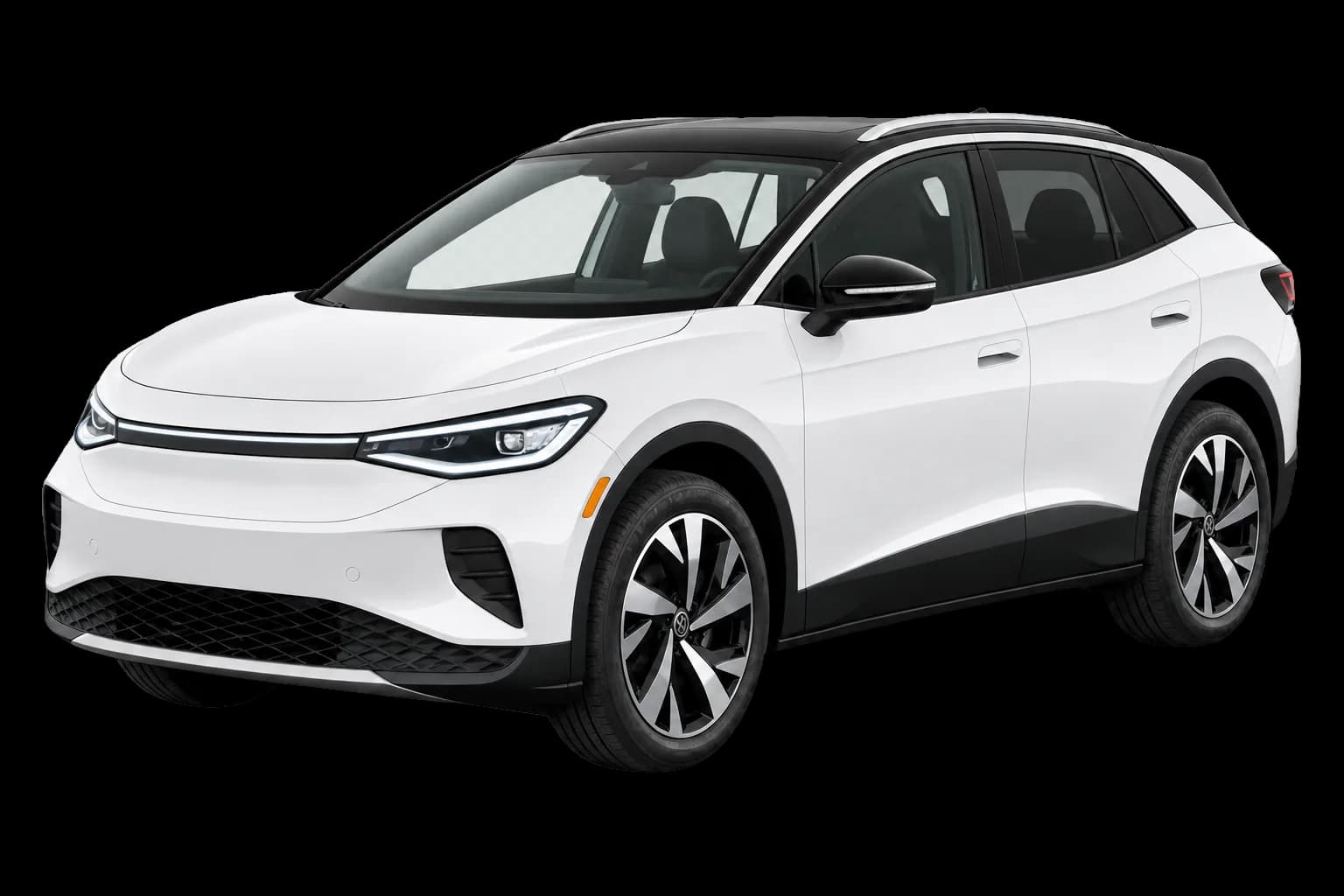
Variants & batteries at a glance
| Variant | Period (EU) | Usable capacity | Cell chemistry |
|---|---|---|---|
| Pure (52 kWh) | 2/2021 – 3/2026 | 52 | NMC |
| Pro Performance (77 kWh) | 12/2020 – 10/2023 | 77 | NMC |
| Pro / Pro 4MOTION (77 kWh, from the model refresh) | since 10/2023 | 77 | NMC |
| GTX 4MOTION (77 kWh, all-wheel drive) | 7/2021 – 2025 | 77 · 77 | NMC |
| Facelift (from 3/2026): Pure with LFP | since 3/2026 | 58 | LFP |
Pure (52 kWh) (2/2021 – 3/2026)
| Period | net kWh | Chemistry | Cells |
|---|---|---|---|
| 2/2021 – 3/2026 | 52 | NMC | MEB pouch cells (8 modules); battery-system assembly in Braunschweig, car built in Zwickau, from 5/2022 also Emden |
The entry point with two traps in the early build years: AC charges two-phase at 7.2 kW only, and 110 kW DC rapid charging was optional — only later Pures (from 2023) come with up to 11 kW AC and 145 kW DC as standard. On an early Pure, the charging equipment therefore belongs in the first question.
Early: AC 7.2 kW, DC 50 kW as standard (110 kW optional). From 2023: AC up to 11 kW, DC 145 kW (10–80% in 25 minutes).
Battery warranty for this variant: 8 years / 160,000 km (70% minimum capacity).
Pro Performance (77 kWh) (12/2020 – 10/2023)
| Period | net kWh | Chemistry | Cells |
|---|---|---|---|
| 12/2020 – 10/2023 | 77 | NMC | MEB pack with 12 modules — the same battery class as the ADAC endurance-test ID.3 |
The volume model of the first years (150 kW/204 PS). In the fleet evaluation of nearly 10,000 battery tests, the 77 kWh ID.4 stands at 92.77% beyond 100,000 km — 92.27% with newer 3.x software. DC initially charged at 125 kW; ID. Software 3.0 brought 135 kW to existing cars via update.
AC 11 kW, DC 125 kW, from software 3.0 up to 135 kW (10–80% around 35 minutes in the ADAC measurement).
Battery warranty for this variant: 8 years / 160,000 km (70% minimum capacity).
Pro / Pro 4MOTION (77 kWh, from the model refresh) (since 10/2023)
| Period | net kWh | Chemistry | Cells |
|---|---|---|---|
| since 10/2023 | 77 | NMC | Same 77 kWh pack, new APP550 rear motor with 210 kW/286 PS and 545 Nm |
The refresh brought the more efficient APP550 motor and 175 kW DC — measured briefly up to 185 kW in practice, 10–80% in around 32 minutes. Too young for long-term figures of its own; on the battery side the 77 kWh reference picture applies.
AC 11 kW, DC up to 175 kW (10–80% in 28 minutes per data sheet, around 32 in practice).
Battery warranty for this variant: 8 years / 160,000 km (70% minimum capacity).
GTX 4MOTION (77 kWh, all-wheel drive) (7/2021 – 2025)
| Period | net kWh | Chemistry | Cells |
|---|---|---|---|
| 7/2021 – 10/2023 (220 kW) | 77 | NMC | 77 kWh pack plus a front motor; DC 135 kW |
| 10/2023 – 2025 (250 kW) | 77 | NMC | From the refresh 250 kW/340 PS and DC 175 kW |
The all-wheel-drive flagship in two output stages. Battery identical to the Pro — on the ID.4, the performance question is not a battery question.
AC 11 kW; DC 135 kW (until 10/2023) or 175 kW (after).
Battery warranty for this variant: 8 years / 160,000 km (70% minimum capacity).
Facelift (from 3/2026): Pure with LFP (since 3/2026)
| Period | net kWh | Chemistry | Cells |
|---|---|---|---|
| since 3/2026 (Pure) | 58 | LFP | LFP cells in the entry model for the first time (140 kW/190 PS); DC 105 kW |
With the big facelift, the entry model arrives with an LFP battery (436 km WLTP) — different charging behaviour and care than NMC. At the same time the name ends: the facelift trades as ID. Tiguan, built only in Emden. On the used market this plays no role yet.
AC 11 kW, DC 105 kW (80% in 26 minutes).
Battery warranty for this variant: 8 years / 160,000 km (70% minimum capacity).
The ID.4 is VW's world car among EVs (built since late 2020 in Zwickau, from 2022 also in Emden) and now widely and cheaply available used: entry around €19,000 to €21,000, median around €35,500. Yet hardly any model hides so many quiet differences between outwardly identical cars: charging equipment, software version, recall status — that is where the price is decided.
One model, many states: what matters per build year
The early Pure charges AC two-phase at 7.2 kW only, and 110 kW DC was optional — 11 kW AC and 145 kW DC only became standard from 2023. The Pro Performance started at 125 kW DC; ID. Software 3.0 brought 135 kW to existing cars via update (plus the 80% battery-care mode). From the 10/2023 refresh, the APP550 motor (286 PS) and 175 kW DC deliver the biggest leap. When buying used, the software version therefore belongs in the listing questions right next to the build year.
Recall 93MI and the fleet data
The ID.4 is on the list of the March 2026 MEB battery-module recall (code 93MI, KBA 16271R; ID.3/ID.4/ID.5/ID. Buzz together 22,182 vehicles in Germany): diagnostic software plus module replacement on conspicuous batteries. The status is one VIN query at a VW partner — and a replaced module is fresh hardware, not a flaw. The ageing itself is unremarkable: 92.77% SoH on fleet average beyond 100,000 km, and the identical 77 kWh class held 89% at 220,158 km in the ADAC's ID.3 endurance test.
The SoH special case: the dealer cannot help
Reading it yourself works via OBD and Car Scanner ('maximum energy content' ÷ 52 or 77 kWh) — with the known BMS caveats, and from model year 2024 the value is partly missing altogether. The route via a VW dealer demonstrably ends nowhere: the diagnostic data set is encrypted and can only be evaluated by VW. Whoever wants a robust, presentable battery record on an ID.4 cannot avoid the independent route — strongest as a documented history rather than a single measurement.
What to check before buying
- Have the 93MI status and service actions checked against the VIN — including the 2022 12 V/software action (software 2.4, new 12 V battery).
- Clarify the specific car's charging equipment: early Pure — is 110 kW DC on board? Pro — is software 3.0 installed (135 kW)? These are real everyday and value differences.
- Ask to see the software version. Many improvements arrived via update — a well-kept software state speaks for a well-kept owner.
- Prove the battery state independently. With the dealer route encrypted and the BMS display fluctuating, the documented history is what counts — as a demand when buying, as an argument when selling.
Battery warranty
VW warrants the battery for 8 years with at least 70% remaining capacity. Mileage limits and exceptions are shown with the variants above and in the questions below.