Used BMW i4: Battery, Variants, SoH
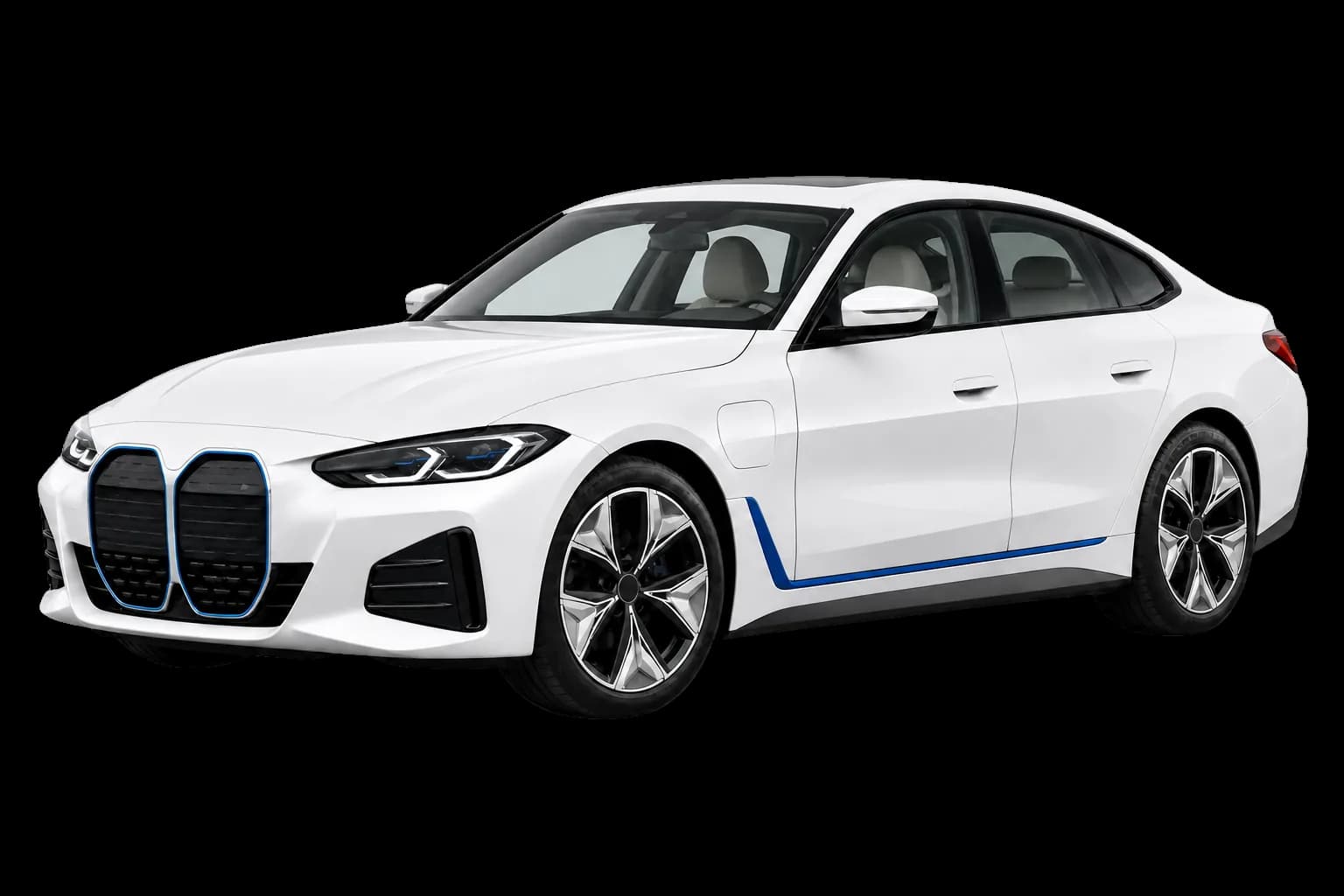
Variants & batteries at a glance
| Variant | Period (EU) | Usable capacity | Cell chemistry |
|---|---|---|---|
| eDrive40 (81.1 kWh) | 11/2021 – 6/2024 | 81.1 | NMC |
| M50 (81.1 kWh, all-wheel drive) | 11/2021 – 6/2024 | 81.1 | NMC |
| eDrive35 (67.0 kWh) | 11/2022 – 6/2024 | 67.0 | NMC |
| Facelift: eDrive35/40, xDrive40, M50 xDrive | since 7/2024 | 67.1 · 81.1 – 81.3 | NMC |
eDrive40 (81.1 kWh) (11/2021 – 6/2024)
| Period | net kWh | Chemistry | Cells |
|---|---|---|---|
| 11/2021 – 6/2024 | 81.1 | NMC | BMW Gen5, prismatic cells (suppliers CATL and Samsung SDI); pack assembly in Dingolfing, car built in Munich |
The volume model. Documented owner readings from the i4 forum: 95.4% after 2.5 years/43,000 km, one single reading around 90% at 47,000 km — the BMS estimate read out via CarData fluctuates noticeably, so individual readings are reference points, not a verdict.
AC 11 kW, DC up to 205 kW (10–80% in around 31 minutes per data sheet).
Battery warranty for this variant: 8 years / 160,000 km (70% minimum capacity).
M50 (81.1 kWh, all-wheel drive) (11/2021 – 6/2024)
| Period | net kWh | Chemistry | Cells |
|---|---|---|---|
| 11/2021 – 6/2024 | 81.1 | NMC | Identical Gen5 pack to the eDrive40; two motors totalling 400 kW |
The performance variant shows no conspicuously faster ageing in documented measurements: 94.5% after 3.5 years/81,000 km, 96 to 97% at 30,000 km (read out via BMW CarData).
AC 11 kW, DC up to 205 kW (10–80% in around 31 minutes).
Battery warranty for this variant: 8 years / 160,000 km (70% minimum capacity).
eDrive35 (67.0 kWh) (11/2022 – 6/2024)
| Period | net kWh | Chemistry | Cells |
|---|---|---|---|
| 11/2022 – 6/2024 | 67.0 | NMC | BMW Gen5, prismatic cells — smaller pack, same technology |
The later entry point into the range: around 95% after 3 years/35,000 km documented. On the used market it is the cheapest way into an i4 — verified listings start just above €35,000.
AC 11 kW, DC up to 180 kW (10–80% in around 32 minutes).
Battery warranty for this variant: 8 years / 160,000 km (70% minimum capacity).
Facelift: eDrive35/40, xDrive40, M50 xDrive (since 7/2024)
| Period | net kWh | Chemistry | Cells |
|---|---|---|---|
| from 7/2024 (eDrive35) | 67.1 | NMC | BMW Gen5, prismatic — hardware unchanged |
| from 7/2024 (eDrive40, xDrive40, M50 xDrive) | 81.1 – 81.3 | NMC | BMW Gen5, prismatic; the ADAC data sheets state 81.1 to 81.3 kWh net depending on variant |
The facelift left battery and charging power unchanged — the range gains (eDrive40: 585 to 600 km WLTP) come from efficiency. New is the all-wheel-drive xDrive40 with 295 kW; since the 2025 model-year update an M60 tops the range. These build years are too young for long-term figures.
Unchanged: AC 11 kW, DC 205 kW (eDrive35: 180 kW); the ADAC measured 10–80% in 28 minutes on the xDrive40.
Battery warranty for this variant: 8 years / 160,000 km (70% minimum capacity).
The i4 is BMW's electric Gran Coupé from the Munich plant (Gen5 battery from Dingolfing, built since autumn 2021) and is now arriving on the used market in volume: 2022 cars average around €41,000, and the cheapest robust listings (eDrive35) start just above €35,000. On the battery side the i4 is in many ways the counterpart to the i3: every i4 is still under battery warranty. What matters is the recall history and the documented state.
Warranty active everywhere — the state still decides
BMW warrants 8 years or 160,000 km on 70% of capacity. Because production only started in autumn 2021, even the oldest i4 are covered until late 2029. The safety net only kicks in below 70%, though — for negotiation and resale, the documented state counts long before that. And unlike the i3, the i4 has no secret menu: the state does not make itself visible.
Recalls: small numbers, an important paperwork check
Three battery-related actions are documented — the 2022 cell-defect recall (83 vehicles worldwide, production November 2021 to June 2022), the 2024 US recall over weld seams on battery modules, and the Europe-wide 2025 Safety Gate notice SR/02913/25 (cell modules/module frames, production July 2021 to February 2024). All affect few vehicles, all were resolved by inspection and module or battery replacement. For a purchase that means routine, not alarm: have a BMW partner confirm that no action is outstanding on the car you want.
What the documented figures show
The i4 still lacks a public endurance-test series like the ID.3's. Forum readings from the first two to three and a half years mostly sit between 93 and 97% SoH (up to a good 80,000 km), with one single reading around 90%. Speaking for the battery generation: in the AUTO BILD endurance test, an iX3 with the same Gen5 technology retained practically its full capacity after 100,000 km. The caveat with all self-readings: the BMS estimate fluctuates with temperature and balancing — the i4 forum documents the same car showing noticeably different values within months.
What to check before buying
- Get the action status in writing. Have a BMW partner check recalls and technical actions (see above) against the VIN — two minutes, a clear answer.
- Ask the seller for the SoH. Any owner can pull a data archive via BMW CarData ('Energieinhalt der Hochvoltbatterie', divided by 67.0/67.1 or 81.1 kWh). Alternatively: the dealer battery check, the basis of the BMW battery certificate since August 2025.
- Test-drive questions: any drivetrain-check warnings in the history? 12 V battery ever replaced? Does the car charge on AC and DC without aborts?
- Document the trend, not a single value. One day's BMS reading is a snapshot; what defends the price is the documented history over weeks. A history-based certificate provides that — and the market now expects it: mobile.de requires the upload whenever the 'with battery certificate' box is ticked.
Battery warranty
BMW warrants the battery for 8 years with at least 70% remaining capacity. Mileage limits and exceptions are shown with the variants above and in the questions below.